


Arch Clinic
Comprehensive Oral Rehabilitation


Rebuilding. Restoring. Preserving Your Smile.
When teeth become extensively worn, damaged or heavily restored, the effects can extend far beyond appearance. Eating may become uncomfortable, teeth may continue to break down, and existing crowns or bridges may no longer function as they should.
Comprehensive oral rehabilitation brings these problems together into one carefully coordinated treatment plan.
At Arch Dentistry in Ballito, our approach is centred on preserving natural teeth wherever they can be predictably maintained, rebuilding comfortable function and creating restorations designed around your individual needs.
Whether treatment involves restoring your existing teeth or combining them with selected dental implants, every rehabilitation begins with understanding the condition of your mouth as a whole.
Information
Comprehensive Oral Rehabilitation
Comprehensive oral rehabilitation, sometimes called full mouth reconstruction, is the coordinated restoration of multiple teeth and their relationship with the bite.
Rather than treating each damaged tooth independently, we consider how the teeth, supporting tissues, jaw movements and existing restorations work together.
Treatment may involve rebuilding worn teeth, replacing failing crowns or bridges, restoring missing teeth and correcting problems with the way the upper and lower teeth meet.
Importantly, comprehensive rehabilitation does not automatically mean removing teeth or placing dental implants.
Where natural teeth have a favourable prognosis, preserving and restoring them is often an important part of the treatment plan.
The aim is to establish a comfortable, functional and maintainable dentition, while considering the appearance of your smile.
Patients considering comprehensive rehabilitation often have several dental problems that have developed gradually over many years.
These may include:
- Severely worn, shortened or damaged teeth.
- Multiple failing crowns, bridges or large restorations.
- Repeated fractures or breakdown of previously restored teeth.
- Missing teeth alongside remaining teeth that can still be preserved.
- Difficulty chewing or discomfort associated with an unstable bite.
- Changes in tooth position, tooth proportions or the relationship between the upper and lower teeth.
- A combination of functional and aesthetic concerns that cannot be adequately addressed by treating one tooth at a time.
Some patients have spent years repairing individual teeth, only to find that another restoration fails shortly afterwards.
In these situations, a broader assessment may help identify the underlying problems and establish a more coordinated treatment approach.

When years of wear begin to affect the bite
Rebuilding Severely Worn Teeth
Teeth can gradually lose their original shape through grinding, erosion, abrasion or a combination of factors.
In advanced cases, the teeth may become noticeably shorter, lose important biting surfaces or develop repeated fractures. Existing fillings and crowns may also begin to fail.
Restoring severely worn teeth involves more than making them longer.
We assess how the upper and lower teeth meet, the available space for restorations, jaw movements and the condition of the remaining tooth structure.
Where appropriate, carefully planned restorations can rebuild lost tooth anatomy and establish a more stable relationship between the teeth.
The objective is to restore comfortable chewing and appropriate tooth proportions while preserving as much suitable natural tooth structure as reasonably possible.

Looking beyond the individual restoration
Restoring Failing Crowns and Bridges
A crown or bridge may eventually require replacement because of wear, fracture, recurrent decay, changes in the supporting teeth or problems with the bite.
When several restorations are failing, replacing each one independently may not address the wider functional problem.
At Arch Dentistry, we assess the existing restorations together with the health of the underlying teeth, supporting tissues and overall bite.
This helps us determine which restorations can be maintained, which teeth require additional treatment and whether a more comprehensive reconstruction would provide a better long-term foundation.
Where teeth can be retained, new restorations can be designed as part of a coordinated plan rather than a series of unrelated repairs.

A stable foundation for the final restorations
Reconstructing Your Bite
One of the most important aspects of comprehensive rehabilitation is understanding the relationship between the upper and lower teeth.
Years of tooth wear, missing teeth, previous dental treatment or changes in tooth position can alter the way the teeth meet.
Simply replacing damaged crowns or rebuilding individual teeth without considering this relationship may leave important functional problems unresolved.
We carefully evaluate the existing bite, jaw movements, available restorative space and the intended shape and position of the teeth.
Where necessary, the bite is reconstructed as part of the overall treatment plan.
This process helps guide the design of the restorations and provides a more coordinated approach to function, appearance and long-term maintenance.
Seeing the bigger picture before treatment begins
Digital Planning and Smile Design
Comprehensive oral rehabilitation requires careful planning across multiple teeth, and often both dental arches.
At Arch Dentistry, clinical examination is supported by digital dental scans, photographs, appropriate imaging and computer-aided restorative design.
These records help us study tooth proportions, the existing bite, available restorative space and the relationship between the proposed restorations.
Digital planning also allows us to evaluate treatment options and communicate the intended changes before committing to definitive restorations.
When implants form part of the rehabilitation, their position is planned in relation to the overall restorative design.
Our aim is to establish a clear treatment direction before undertaking irreversible procedures.
Planning, testing and refining your new bite
The Importance of Provisional Restorations
For many comprehensive rehabilitation cases, temporary or provisional restorations are a particularly important part of treatment.
These restorations allow us to introduce the planned changes to tooth shape, position and bite before completing the final ceramic work.
During this phase, we can assess comfort, chewing function, speech, appearance and how the proposed restorations work together.
Adjustments may be made as the patient adapts and as we evaluate the clinical response.
This staged approach provides an opportunity to refine the treatment plan before the definitive restorations are manufactured.
Not every rehabilitation requires the same provisional phase. Its duration and design depend on the complexity of the case and the changes being introduced.
Individually designed. Carefully manufactured.
Your Final Restorations
Once the planned bite and restorative design have been appropriately assessed, we move towards the final restorations.
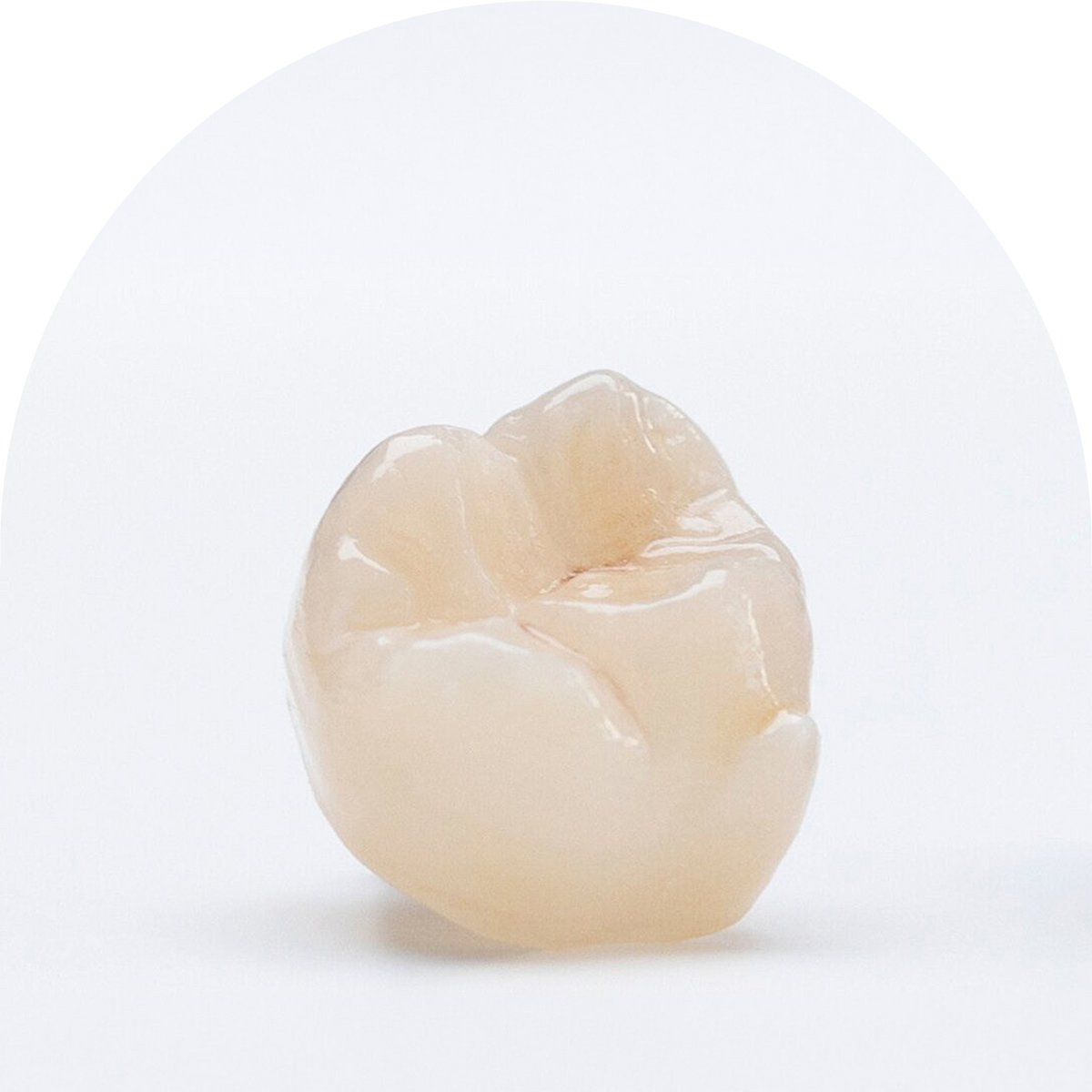
Depending on the clinical requirements, treatment may involve ceramic crowns, overlays, bridges and selected implant-supported restorations.
At Arch Dentistry, we predominantly work with modern ceramic materials, including zirconia and lithium disilicate, chosen according to the functional and aesthetic demands of each restoration.
Our in-house digital laboratory allows close coordination between the clinical planning, design and manufacture of the restorations.
Dr Thinus van Niekerk oversees the rehabilitation process, from the initial assessment and treatment planning through to the design and fitting of the final restorations.
This continuity is particularly valuable in complex cases where small changes in tooth shape, contact, position or bite can influence the overall result.
Your Rehabilitation Journey
1. Comprehensive consultation and assessment
We begin by discussing your concerns, dental history, previous treatment and what you would like to improve.
A detailed clinical assessment, together with appropriate diagnostic records, helps us understand the condition of your teeth, gums, supporting structures and bite.

Your Rehabilitation Journey
2. Individual treatment planning
We determine which teeth can be maintained, which restorations require replacement and whether additional procedures or dental implants may be needed.
The proposed treatment sequence is developed around your clinical needs and restorative goals.

Your Rehabilitation Journey
3. Initial treatment and stabilisation
Where necessary, we first address active dental disease, infection, failing restorations or other conditions that may compromise the rehabilitation.
Some patients require extractions, periodontal care, root canal treatment or other preparatory procedures before reconstruction begins.
Your Rehabilitation Journey
4. Bite reconstruction and provisional restorations
Where indicated, temporary restorations are used to introduce and assess the planned changes in tooth shape and bite.
This allows us to evaluate function, comfort and appearance before proceeding to the final restorations.
Your Rehabilitation Journey
5. Final restorative treatment
Once the treatment plan has been appropriately assessed and refined, the definitive crowns, bridges, overlays or implant-supported restorations are completed.
Your Rehabilitation Journey
6. Long-term maintenance
Comprehensive rehabilitation requires ongoing care.
Regular dental examinations, professional cleaning, appropriate home care and monitoring of the bite and restorations help protect the investment made in treatment.
Where grinding or heavy biting forces are a concern, additional protective measures may be recommended.
Treatment Portfolio
Every rehabilitation presents a different combination of functional, biological and aesthetic challenges. Our clinical portfolio illustrates how treatment can be adapted to the condition of the remaining teeth and the individual patient's needs.
Case 1
Smile Makeover and Functional Rehabilitation
What began as a smile makeover to replace repeatedly failing veneers developed into a more comprehensive rehabilitation, combining aesthetic improvements with the restoration of damaged teeth and replacement of a tooth that could no longer be saved.
Following the extraction of an infected lower tooth, a dental implant was placed to restore the missing tooth. The remaining teeth were restored using carefully designed ceramic crowns and overlays, with particular attention to achieving a natural, harmonious smile.
Lithium disilicate ceramics were selected for the natural-tooth restorations because of their excellent aesthetic properties and suitability for the patient's well-balanced bite. Zirconia was reserved for the implant-supported crown.
This case demonstrates how thoughtful treatment planning and material selection can bring together aesthetics, function and the preservation of natural teeth in one coordinated rehabilitation.


Case 2
Full Mouth Rehabilitation and Immediate Implant Placement
This comprehensive rehabilitation involved a patient with a strong, deep bite and extensive restorative needs. As the patient was travelling from abroad, treatment required careful planning and coordination within a limited period.
The rehabilitation combined crown lengthening of the front teeth with eight lithium disilicate crowns in the visible smile region and six zirconia crowns on the back teeth, where greater functional demands influenced the choice of material.
A compromised tooth was also removed and replaced with a dental implant. Because the available bone and clinical conditions were favourable, the implant could be placed immediately following extraction, together with bone grafting and a temporary implant-supported crown.
The temporary crown was manufactured from PMMA and fitted to the definitive abutment. It was carefully adjusted to minimise biting forces during healing. The patient will return for the final zirconia crown once the implant and surrounding tissues have healed appropriately.
This case demonstrates how different restorative materials and surgical techniques can be combined within a single rehabilitation, with each decision guided by the patient's anatomy, bite, aesthetic requirements and treatment circumstances.


Comprehensive Oral Rehabilitation
Frequently Asked Questions
Full mouth reconstruction is a broader treatment approach involving the coordinated restoration of multiple teeth and the bite.
Dental implants may form part of that treatment, but they are not always necessary. Many rehabilitations involve restoring and preserving natural teeth.
No. Preserving suitable natural teeth is an important consideration.
We assess the condition and prognosis of each tooth before recommending whether it should be restored, maintained or removed.
In many cases, worn teeth can be restored using suitable restorative techniques.
The options depend on the remaining tooth structure, the cause of the wear, the bite and the overall condition of the teeth. Some cases require extensive reconstruction, while others can be managed more conservatively.
It may, particularly where the existing bite has been affected by extensive wear, missing teeth or previous restorations.
Any proposed changes are carefully planned. Temporary restorations may be used to assess comfort and function before completing the final treatment.
Where appropriate, provisional restorations are used to maintain appearance and function while treatment progresses.
The type and duration of temporary restorations depend on the procedures involved and the condition of the remaining teeth.
Treatment duration varies considerably.
Some cases involve a relatively straightforward restorative sequence, while others require staged treatment, provisional restorations, extractions, implant placement or healing periods.
An individual timeline is provided following assessment and treatment planning.
Treatment is carried out using appropriate anaesthesia and pain-management measures.
Some procedures may cause temporary sensitivity, discomfort or swelling. We explain the anticipated recovery and postoperative care associated with each stage.
Modern dental restorations can provide many years of service, but no restoration can be guaranteed to last indefinitely.
Longevity depends on the condition of the supporting teeth and tissues, biting forces, oral hygiene, material selection and ongoing maintenance. Repairs or replacement may be necessary over time.
The cost depends on the number of teeth requiring treatment, the complexity of the bite reconstruction, the restorative materials and whether implants or additional procedures are needed.
Following a comprehensive assessment, we prepare an individual treatment proposal explaining the recommended treatment stages and associated costs.
Where teeth cannot be predictably maintained, implant-supported rehabilitation may be considered.
Patients requiring replacement of an entire upper or lower arch can learn more about our All-on-X Rehabilitation treatment options.


Comprehensive Oral Rehabilitation in Ballito
Arch Dentistry provides comprehensive restorative and implant rehabilitation from our clinic in Ballito, on the KwaZulu-Natal North Coast.
We welcome patients from Ballito, Salt Rock, Umhlanga, Durban and surrounding areas who are experiencing extensive tooth wear, failing dental restorations, missing teeth or difficulties with their bite.
Our integrated clinical and in-house laboratory workflow supports the careful planning and manufacture of complex restorations within one coordinated treatment environment.
Begin with a Comprehensive Rehabilitation Consultation
If you have been struggling with repeatedly failing dental work, severely worn teeth or a bite that no longer feels comfortable, the first step is to understand what can be preserved and how your teeth can be restored.
We will assess your current condition, explain the available treatment approaches and help you make an informed decision about the most appropriate rehabilitation plan.